




Dialysis
Dialysis at Plexis Super Speciality Hospital, Sohna
Restoring Balance. Supporting Life.
The kidneys play a vital role in keeping the body healthy. They filter waste products and excess fluid from the blood, help maintain the body’s electrolyte and acid-base balance, and contribute to blood-pressure regulation. When the kidneys are no longer able to perform these functions adequately, dialysis may be recommended to help remove waste products and excess fluid from the body.
At Plexis Super Speciality Hospital, Sohna, dialysis services are available for patients who require renal replacement therapy. Our approach focuses on safe treatment, regular monitoring, patient comfort and personalised medical care based on the patient’s condition and treatment requirements.
About Dialysis
Dialysis is a treatment that performs some of the important functions of the kidneys when they are unable to work effectively.
During dialysis, waste products, excess salts and extra fluid are removed from the blood. Depending on the patient’s medical condition, dialysis may be required temporarily—for example, in certain cases of acute kidney injury—or regularly for people with advanced or end-stage kidney disease.
Dialysis does not cure chronic kidney disease or restore permanently damaged kidneys. However, when appropriately prescribed and monitored, it can help control the accumulation of waste and fluid in the body and support a patient’s health and quality of life.
The need for dialysis, the frequency of treatment and the most appropriate type are determined by a qualified doctor after considering kidney function, symptoms, blood-test results, fluid status and overall health.
Uses of Dialysis
Dialysis may be recommended in several situations where kidney function is severely reduced.
1. End-Stage Kidney Disease
People with end-stage kidney disease (ESKD/ESRD) may require ongoing dialysis when their kidneys can no longer adequately perform their essential functions.
2. Advanced Chronic Kidney Disease
As chronic kidney disease progresses, waste products and fluid can accumulate in the body. Dialysis may become necessary when kidney function is severely impaired and medical management is no longer sufficient.
3. Acute Kidney Injury
In some patients with acute kidney injury (AKI), kidney function can deteriorate suddenly. Dialysis may sometimes be required temporarily until kidney function improves.
4. Excess Fluid
When the kidneys cannot remove sufficient fluid, it can accumulate in the body and cause swelling or breathing difficulties. Dialysis can help remove excess fluid when medically indicated.
5. Electrolyte and Acid-Base Imbalances
Severe abnormalities in substances such as potassium or significant acid accumulation may require dialysis, particularly when they cannot be adequately controlled through other treatments.
6. Removal of Certain Toxins
In specific medical emergencies, dialysis may be used to remove certain toxic substances from the bloodstream. This depends on the substance involved and the patient’s clinical condition.
How Does Dialysis Work?
There are two main forms of dialysis: haemodialysis and peritoneal dialysis.
Haemodialysis
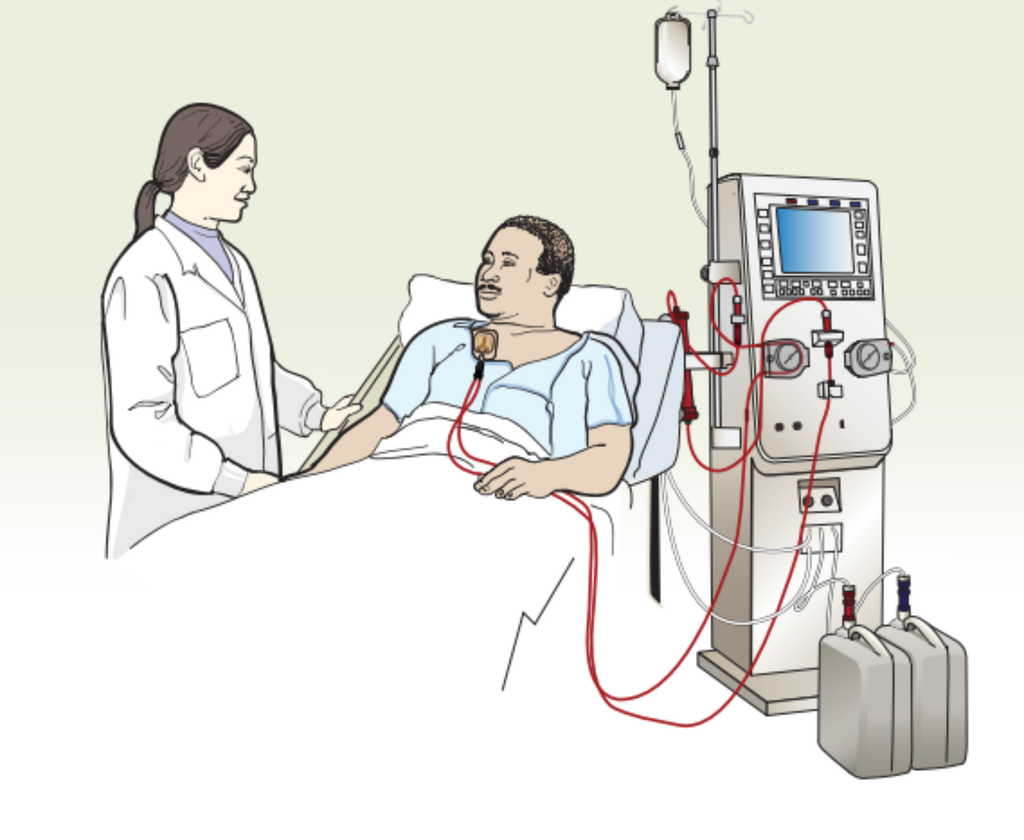
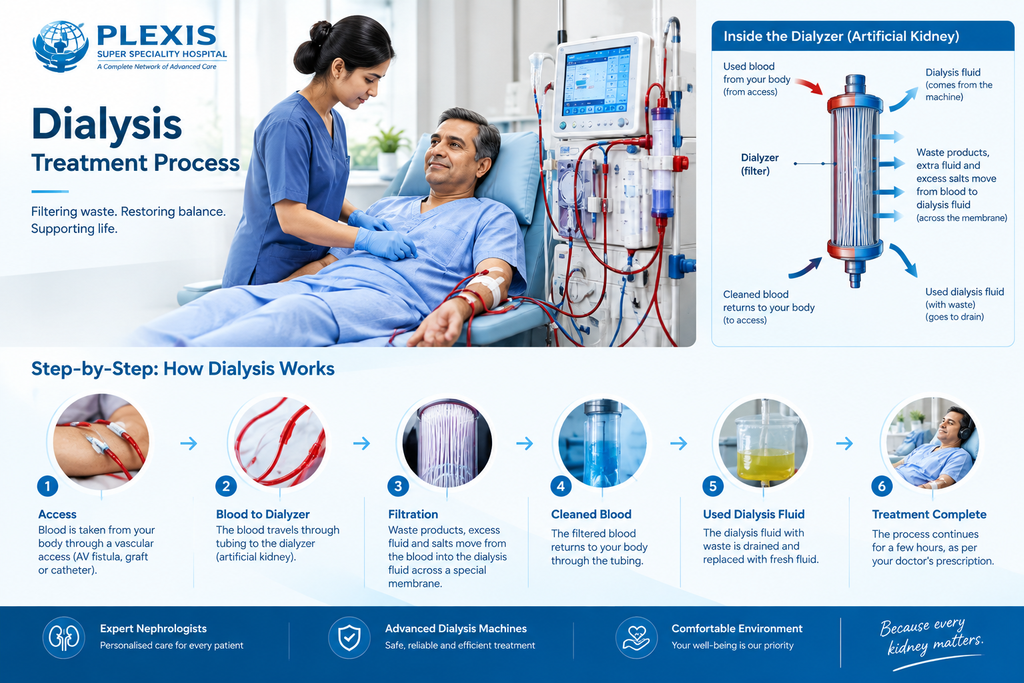
In haemodialysis, blood is taken from the patient’s body and passed through a specialised filter called a dialyzer or artificial kidney.
The dialyzer helps remove:
- Waste products
- Excess salts
- Excess fluid
The filtered blood is then returned to the patient’s body.
A patient undergoing haemodialysis requires a suitable vascular access, such as an arteriovenous (AV) fistula, AV graft or, when appropriate, a dialysis catheter. The type of access depends on the patient’s condition and medical plan.


Peritoneal Dialysis
Peritoneal dialysis uses the peritoneum, the lining of the abdomen, as a natural filtering membrane.
A special dialysis solution is introduced into the abdominal cavity through a catheter. Waste products and excess fluid move from the blood across the peritoneal membrane into the dialysis solution. The used solution is then drained and replaced with fresh solution.
The suitability of peritoneal dialysis depends on several medical and practical factors and should be discussed with a kidney specialist.
Types of Dialysis
1. Haemodialysis
Haemodialysis is the most commonly recognised form of dialysis. It uses a dialysis machine and dialyzer to clean the patient’s blood.
Depending on the treatment plan, haemodialysis may be performed at a dialysis centre several times a week. The exact frequency and duration are individualised by the treating medical team.
2. Peritoneal Dialysis
Peritoneal dialysis uses the patient’s abdominal lining as a natural filter. It may be performed manually through multiple exchanges during the day or with the assistance of a machine, depending on the prescribed method.
Not every patient is suitable for every type of dialysis. The doctor will recommend the most appropriate option based on kidney function, medical history, lifestyle, vascular access, abdominal health and other considerations.
Dialysis at Plexis Super Speciality Hospital
At Plexis Super Speciality Hospital, Sohna, dialysis is provided as part of our multispeciality healthcare services.
Our hospital is equipped to support patients requiring dialysis along with medical evaluation and monitoring. Because kidney patients may have other medical conditions, a multispeciality hospital environment can be particularly useful when additional medical assessment or support is required.
Our approach includes:
Medical Assessment
Patients are assessed by the treating medical team to determine whether dialysis is required and what treatment approach is appropriate.
Regular Monitoring
Vital signs, fluid status and relevant laboratory parameters may be monitored as part of dialysis care according to the patient’s treatment plan.
Individualised Treatment
Dialysis frequency, duration, fluid removal and other treatment parameters are determined according to the patient’s clinical requirements.
Patient-Centred Environment
We aim to provide a safe, comfortable and supportive environment for patients receiving dialysis.
Multispeciality Support
As a multispeciality hospital, Plexis provides access to other medical and supportive services when required as part of a patient’s overall care.
Important: Dialysis treatment is prescribed and supervised by qualified healthcare professionals. The exact treatment plan differs from patient to patient.
Types of Dialysis
1. Haemodialysis
Haemodialysis is the most commonly recognised form of dialysis. It uses a dialysis machine and dialyzer to clean the patient’s blood.
Depending on the treatment plan, haemodialysis may be performed at a dialysis centre several times a week. The exact frequency and duration are individualised by the treating medical team.
2. Peritoneal Dialysis
Peritoneal dialysis uses the patient’s abdominal lining as a natural filter. It may be performed manually through multiple exchanges during the day or with the assistance of a machine, depending on the prescribed method.
Not every patient is suitable for every type of dialysis. The doctor will recommend the most appropriate option based on kidney function, medical history, lifestyle, vascular access, abdominal health and other considerations.
Dialysis at Plexis Super Speciality Hospital
At Plexis Super Speciality Hospital, Sohna, dialysis is provided as part of our multispeciality healthcare services.
Our hospital is equipped to support patients requiring dialysis along with medical evaluation and monitoring. Because kidney patients may have other medical conditions, a multispeciality hospital environment can be particularly useful when additional medical assessment or support is required.
Our approach includes:
Medical Assessment
Patients are assessed by the treating medical team to determine whether dialysis is required and what treatment approach is appropriate.
Regular Monitoring
Vital signs, fluid status and relevant laboratory parameters may be monitored as part of dialysis care according to the patient’s treatment plan.
Individualised Treatment
Dialysis frequency, duration, fluid removal and other treatment parameters are determined according to the patient’s clinical requirements.
Patient-Centred Environment
We aim to provide a safe, comfortable and supportive environment for patients receiving dialysis.
Multispeciality Support
As a multispeciality hospital, Plexis provides access to other medical and supportive services when required as part of a patient’s overall care.
Important: Dialysis treatment is prescribed and supervised by qualified healthcare professionals. The exact treatment plan differs from patient to patient.
How Effective Is Dialysis?
Dialysis can be highly effective at performing some of the waste-removal and fluid-management functions that failing kidneys can no longer perform adequately.
For patients with advanced kidney failure who require regular dialysis, maintaining the prescribed treatment schedule can help:
- Remove accumulated waste products
- Control excess fluid
- Help maintain electrolyte balance
- Reduce symptoms associated with kidney failure
- Support overall health and daily functioning
However, dialysis is not a complete replacement for all kidney functions and does not reverse chronic kidney damage.
For some patients with acute kidney injury, dialysis may only be required temporarily if kidney function subsequently recovers. For patients with permanent severe kidney failure, dialysis may be a long-term treatment unless a kidney transplant becomes an appropriate option.
The effectiveness of dialysis depends on factors such as the patient’s underlying disease, remaining kidney function, treatment schedule, vascular access, nutrition, fluid management and overall health.
Possible Side Effects of Dialysis
Dialysis is generally a well-established treatment, but some patients may experience side effects during or after treatment.
Possible effects include:
- Low blood pressure
- Tiredness or weakness
- Muscle cramps
- Headache
- Nausea
- Itching
- Changes in blood pressure
- Temporary discomfort related to vascular access
Some patients may feel tired after a dialysis session. The severity and frequency of side effects vary between individuals.
Patients should inform the dialysis team if they experience new, severe or persistent symptoms. The medical team can evaluate the cause and make appropriate adjustments to treatment when necessary.
When to Seek Urgent Medical Attention
A dialysis patient should seek immediate medical attention for serious symptoms such as:
- Severe breathing difficulty
- Chest pain
- Loss of consciousness
- Severe weakness or confusion
- Significant bleeding from dialysis access
- High fever or suspected infection
- Sudden severe swelling or other rapidly worsening symptoms
Additional Considerations for Dialysis Patients
Dialysis is only one part of comprehensive kidney care. Patients should follow the treatment plan provided by their doctor and dialysis team.
Follow Your Dialysis Schedule
Missing or shortening dialysis sessions without medical advice can allow waste products and excess fluid to build up and may lead to serious complications.
Follow Your Fluid Recommendations
Many dialysis patients need to limit their daily fluid intake. The appropriate amount varies from person to person and should be determined by the treating doctor or dialysis team.
Follow Your Kidney-Friendly Diet
Dietary requirements may include managing sodium, potassium, phosphorus, protein and fluid intake. Dietary recommendations should be personalised rather than following a generic diet plan.
Take Medicines as Prescribed
Kidney patients often require medicines for conditions such as blood pressure, anaemia, mineral and bone disorders or other underlying illnesses. Medicines should be taken only as prescribed.
Take Care of Dialysis Access
Patients with an AV fistula, graft or catheter need to follow specific access-care instructions to reduce the risk of infection and other complications.
Attend Regular Check-Ups
Regular blood tests and medical reviews help the healthcare team assess dialysis adequacy, nutritional status, electrolyte levels, anaemia and overall health.
Maintain Healthy Habits
Within the limits of the patient’s medical condition, maintaining appropriate physical activity, nutrition, sleep and lifestyle habits can contribute to overall well-being.
FAQs
How long does a dialysis session take?
The duration varies according to the patient’s treatment prescription and clinical requirements. A typical haemodialysis session commonly lasts several hours, but the exact duration should be determined by the treating team.
Is dialysis painful?
Dialysis itself is not generally considered painful. Patients undergoing haemodialysis may experience brief discomfort when needles are inserted into vascular access. Some people may experience cramps, low blood pressure or tiredness during or after treatment.
Can a person live a normal life while on dialysis?
Many people continue to work, spend time with family and participate in daily activities while receiving dialysis. However, dialysis requires regular treatment, dietary and fluid management, medicines and medical follow-up.
What should I eat while on dialysis?
There is no single diet suitable for every dialysis patient. Dietary requirements depend on kidney function, blood-test results, dialysis type and other medical conditions. A renal dietitian or treating doctor can provide personalised recommendations.
Can dialysis patients drink water normally?
Fluid intake may need to be restricted in many dialysis patients, particularly when urine output is low. The appropriate daily fluid allowance should be determined by the treating medical team.
Is dialysis the same as a kidney transplant?
No. Dialysis and kidney transplantation are different treatments. Dialysis replaces some kidney functions, while a successful kidney transplant provides a functioning donor kidney. Not every patient is suitable for transplantation, and evaluation by a transplant team is required.
How often is dialysis required?
The schedule depends on the type of dialysis and the individual patient’s condition. Many patients receiving centre-based haemodialysis undergo treatment multiple times per week. Your nephrologist will determine the appropriate schedule.
Expert Kidney Care at Plexis Super Speciality Hospital
Kidney disease can affect many aspects of a person’s health. Timely diagnosis, appropriate medical treatment, regular monitoring and adherence to the prescribed dialysis plan can play an important role in managing advanced kidney disease.
At Plexis Super Speciality Hospital, Sohna, our dialysis facility is supported by a multispeciality hospital environment, allowing patients to access medical care and other hospital services according to their individual requirements.
If you or a family member has been advised to start dialysis, is already receiving dialysis, or has symptoms of advanced kidney disease, consult a qualified doctor to understand the most appropriate treatment options.